Speculative Presence
Speculative Presence explores forms of presence that do not reveal themselves as immediate physical reality.
The Unseen Continuum
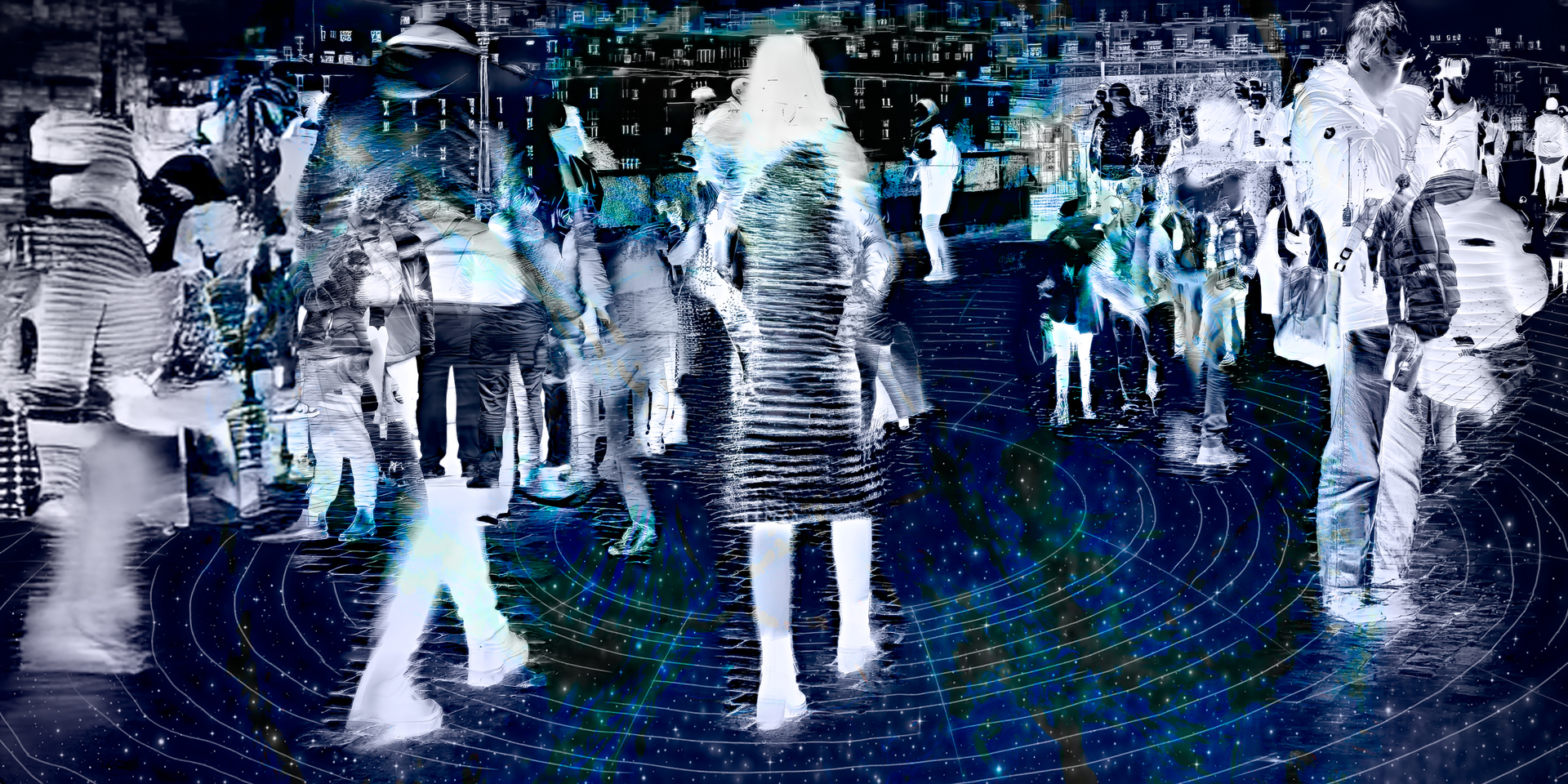
THE UNSEEN CONTINUUM develops an idea previously explored by Michael Bork in his photographic composition QUO VADIS?, part of the series URBAN APPARITIONS. There, the seemingly timeless presence of Prague’s Charles Bridge is juxtaposed with the fleeting moments of the people crossing it. The enduring architecture and the transience of human presence establish a contrast between permanence and impermanence. In THE UNSEEN CONTINUUM, this observation becomes the starting point for a broader reflection on time, existence and the nature of presence. The work moves beyond the visible opposition between permanence and transience, exploring the possibility of a continuity that connects the present with what has passed, and the perceptible with what has disappeared. Human presence may be fleeting, yet its traces, memories and impressions can persist beyond the moment of their physical manifestation. What disappears from immediate view does not necessarily cease to exist in the wider fabric of experience and perception.
The Absent Touch
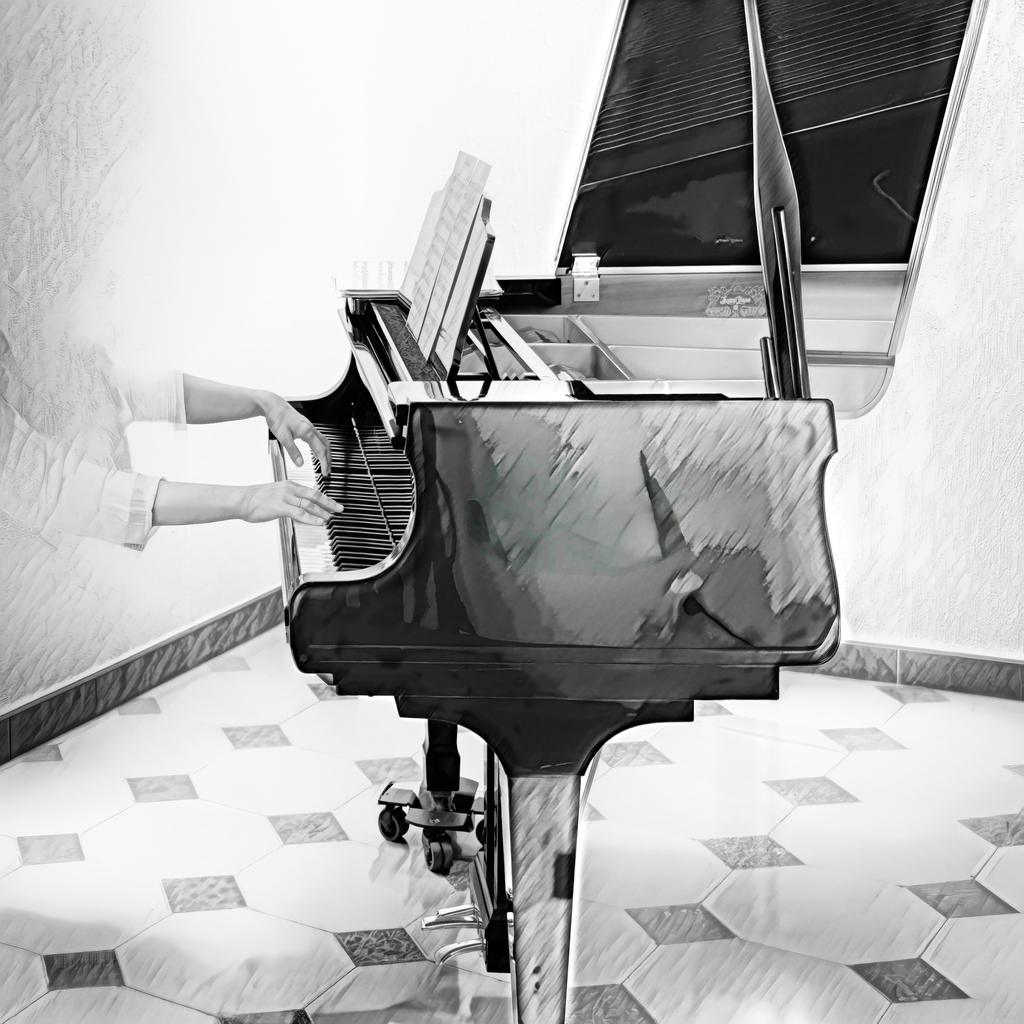
In The Absent Touch, a human presence seems to materialise solely through its action. The hands of a pianist reach into the space of the instrument while the body itself remains unseen. The image thus creates a paradoxical situation: a touch becomes visible even though the one producing it is not visibly present. Through reflection, movement, and photographic layering, the work evokes the possibility of a return – as if a presence from the past were briefly re-establishing contact with the material world. Whether memory, imagination, or actual apparition remains unresolved.
Gone Fishing
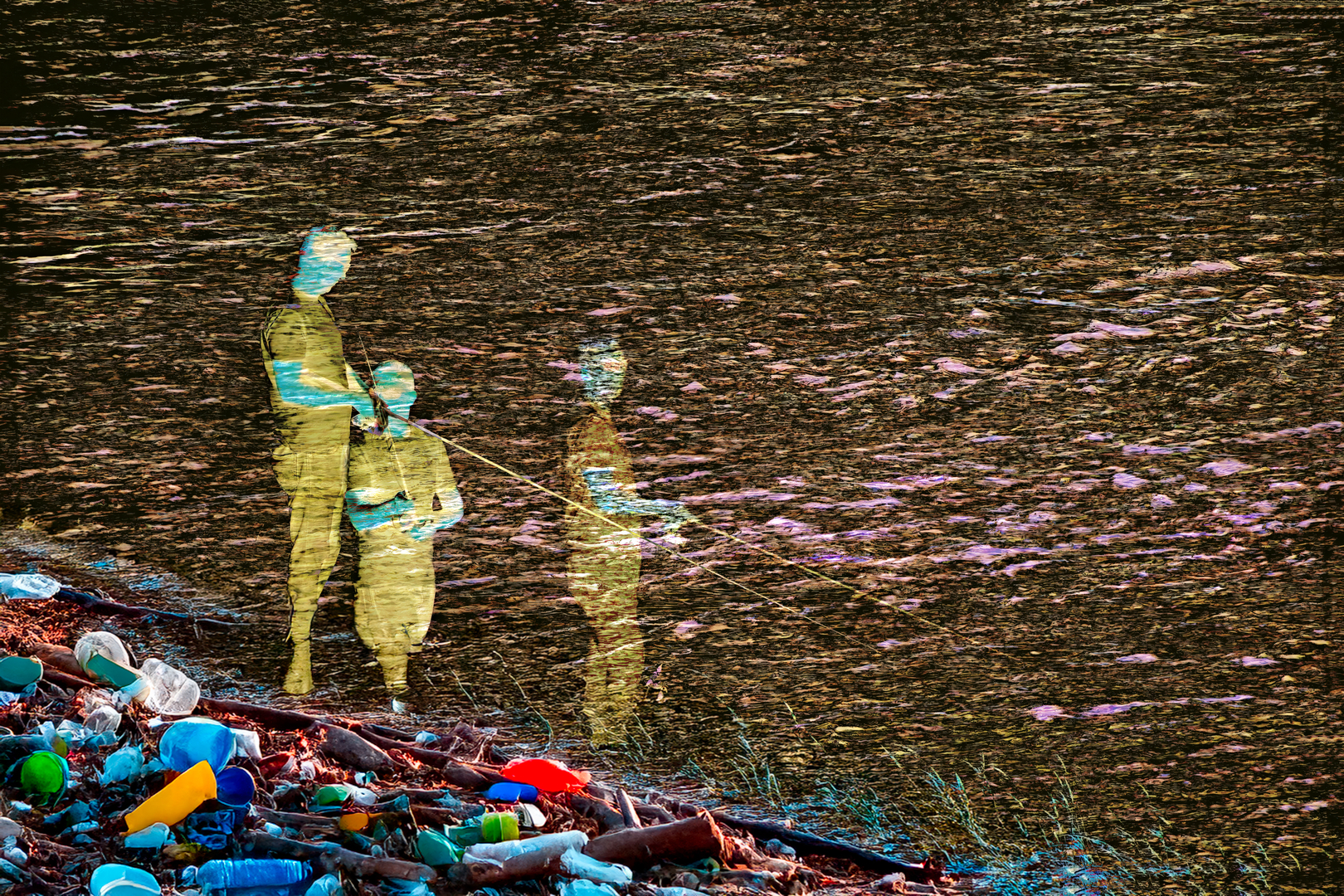
At the intersection of human intervention and ecological destruction, Gone Fishing unfolds a visual reality in which traces of human presence and the consequences of human activity become inseparably intertwined. Plastic waste, the pollution of rivers and oceans, and the relentless exploitation of natural resources form the thematic field of the work. The act of fishing, traditionally associated with patience, an encounter with nature, and aquatic life, confronts a present in which the remnants of human activity increasingly take the place of the living. Through photographic layering, the boundaries between appearance and reality, presence and absence begin to shift. Human figures and the material traces of their world enter into a fragile relationship that resists a definitive reading. Gone Fishing opens up a space between the familiar and the unsettling. The work touches upon questions concerning humanity’s relationship with the natural environment, the consequences of its exploitation, and a future in which the boundaries between resource, habitat, and waste become increasingly difficult to distinguish.